Hire or automate? What makes sense in your SME
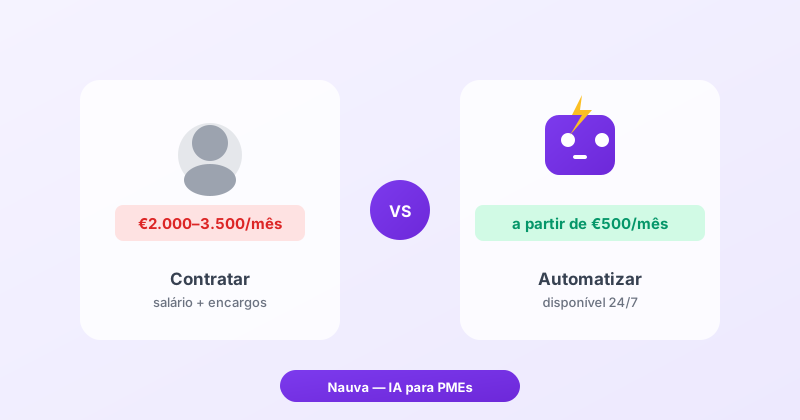
When the business grows and the team feels the pressure, the instinctive answer is to hire. One more person for customer service, someone else for admin. Before opening that vacancy, it is worth asking a simple question: is the problem a lack of people or a lack of efficiency?
The cost of a hire
The cost of a full-time person goes beyond the salary. It includes employer contributions, training, equipment and the time someone on the team spends bringing them on board. And full productivity takes a while to arrive.
Do the maths with your own numbers. Add up everything the hire costs you per year and compare it with what you would gain by solving the problem another way.
What automation can take on
Not everything can be automated. Complex commercial relationships, situations that need empathy and negotiations always stay with people.
But many of the tasks that justify a new hire are repetitive by nature:
- Answering the same questions by email or phone
- Booking, confirming and reminding about appointments or meetings
- Filling in forms and creating records
- Following up on requests that were left waiting
- Generating reports and exporting data
These tasks always follow the same pattern, and that is what automation is for.
An honest comparison
| Hiring | Automation | |
|---|---|---|
| Availability | Working hours | 24 hours a day |
| When volume goes up | The cost goes up | Absorbs more, with its own usage cost |
| Unforeseen events and judgement | Strong | Limited |
| Holidays and sick leave | Yes | No |
| Relationship with the customer | Strong | Limited |
This is not an argument to never hire. It is an argument to not hire before understanding what can be automated.
The model that works in practice
The companies that use technology best do not replace people, they redirect them. Instead of the team spending half the day on repetitive tasks, they spend that time on what needs a human being: selling, solving complex problems, building relationships.
Automation handles the volume. People handle what matters.
Where to start
The starting point is not choosing a tool. It is understanding where the time is going. Over one week, write down the tasks that repeat and how long they take. Usually, two or three account for most of the effort.
Nauva's AI audit does exactly this: we map, quantify and prioritise what gives the most return.
Not sure whether it makes sense for your business? Talk to us, with no commitment.